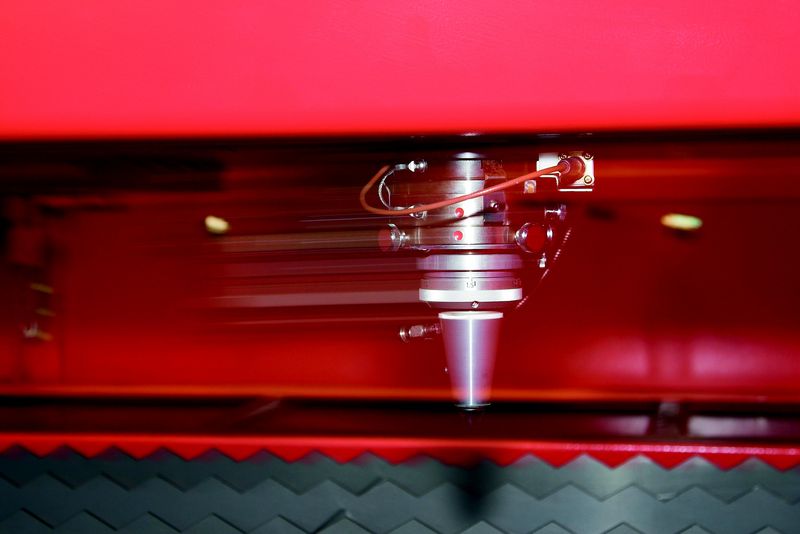
The QUATTRO is one of the most flexible, efficient and compact lasers on the market. Many metal working companies have a large number of components to manufacture but only need to produce one or two at a time. Ease of use, plus low operating costs make the QUATTRO the ideal solution for low volumes, without forgoing precision and quality.
This machine is no longer available.
Find the laser machine that suits your needs
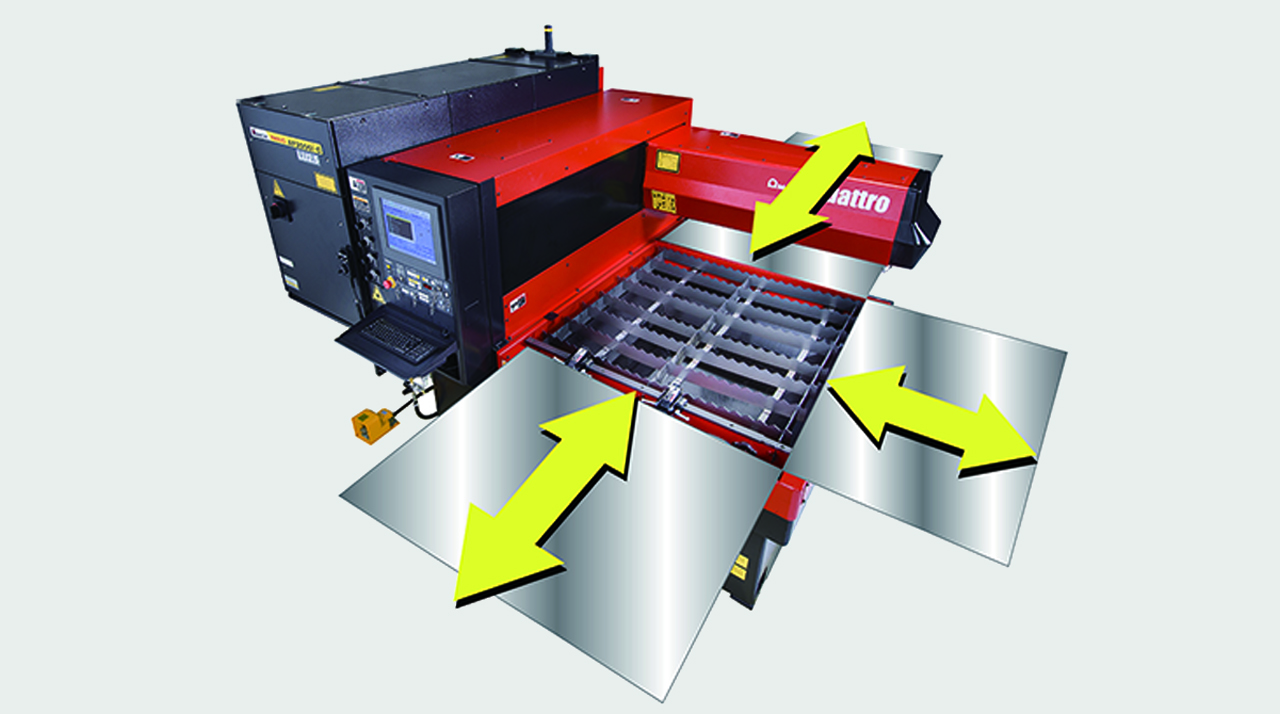
FULL ACCESS TO THE CUTTING AREA:
The three accessible sides of the QUATTRO laser facilitate sheet metal loading and unloading. Large-sized sheets which are bigger than the work area can also be processed, repositioning them manually.
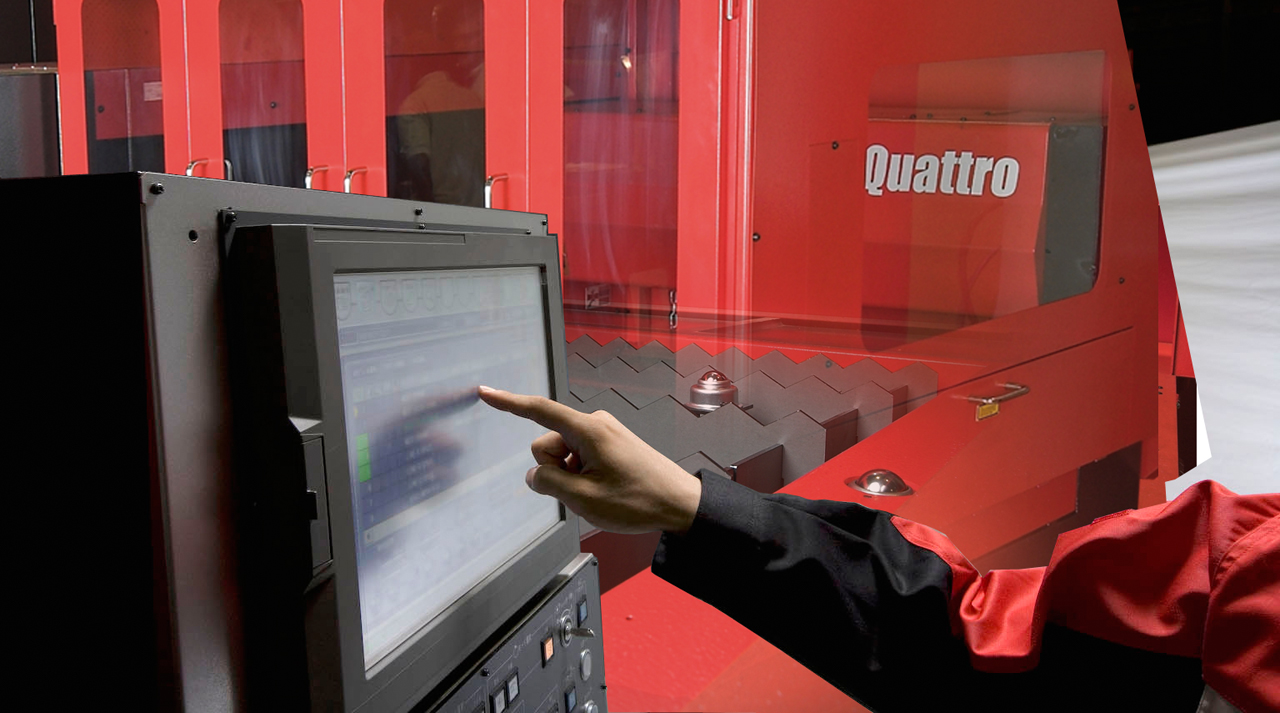
COMPACT STRUCTURE:
With a footprint of just 6.4 m2, the QUATTRO is AMADA's smallest laser. The oscillator and numerical control are contained within the machine to maintain its extremely compact size.
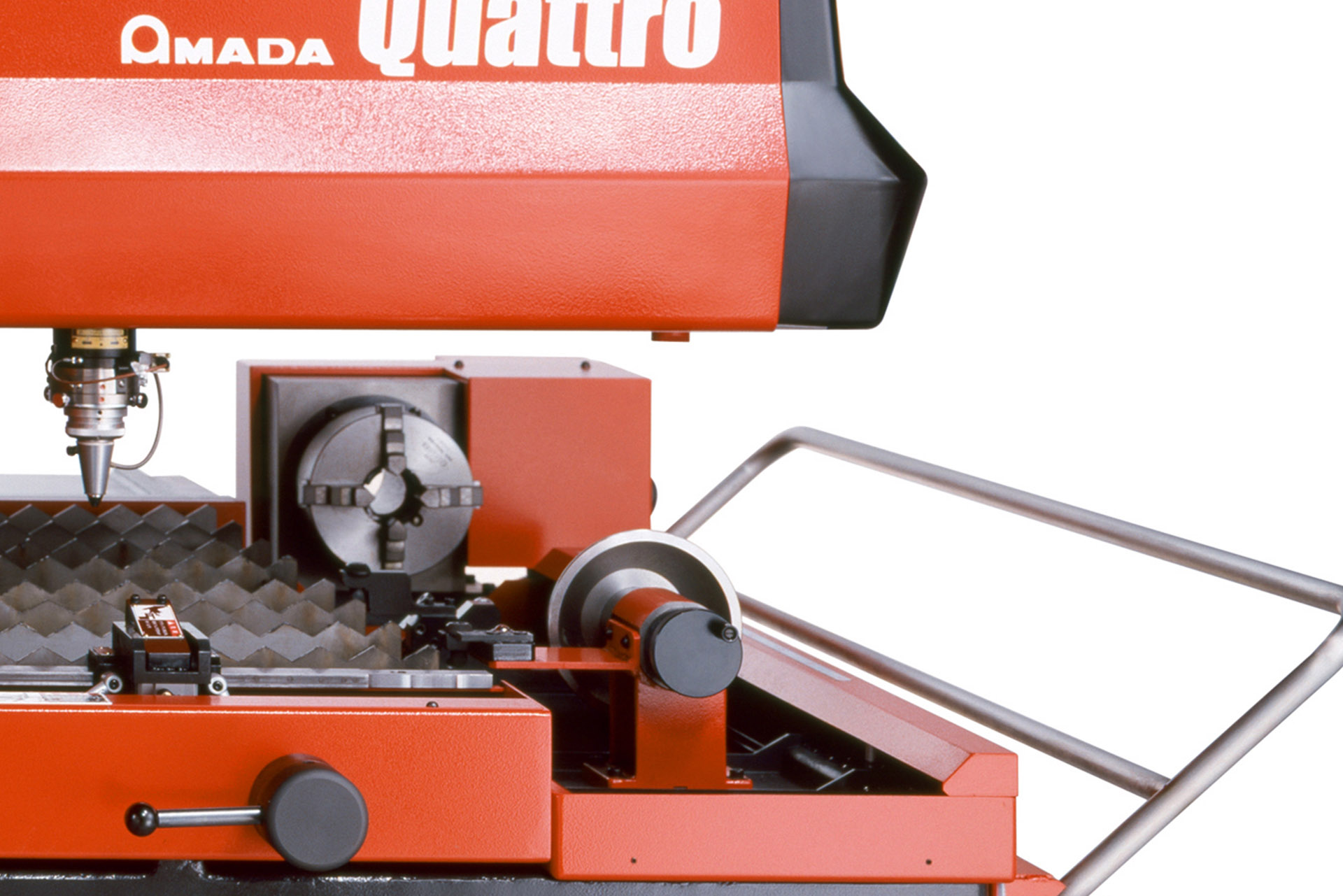
DIVERSIFIED PROCESSING:
With the QUATTRO, not only sheet metal but rectangular and square tubes can be processed, providing even greater flexibility. (Option)
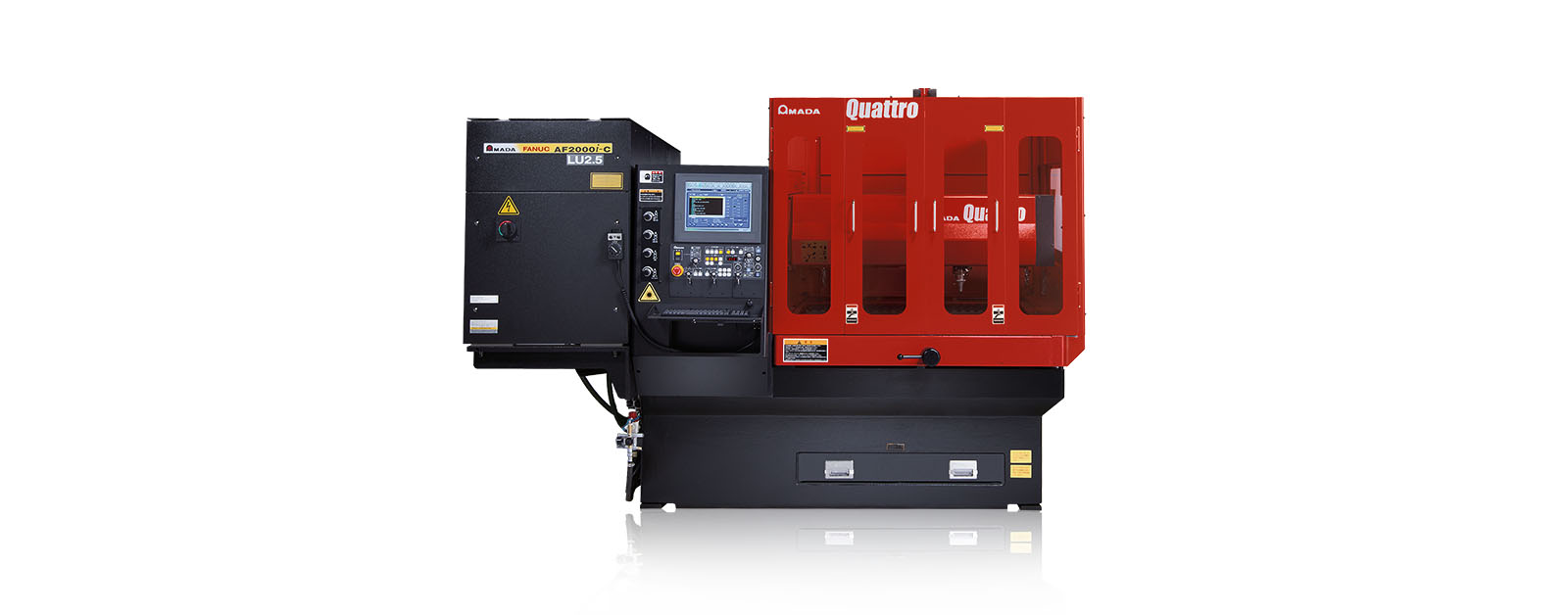
FULL ACCESS TO THE CUTTING AREA:
The three accessible sides of the QUATTRO laser facilitate sheet metal loading and unloading. Large-sized sheets which are bigger than the work area can also be processed, repositioning them manually.
COMPACT STRUCTURE:
With a footprint of just 6.4 m2, the QUATTRO is AMADA's smallest laser. The oscillator and numerical control are contained within the machine to maintain its extremely compact size.
DIVERSIFIED PROCESSING:
With the QUATTRO, not only sheet metal but rectangular and square tubes can be processed, providing even greater flexibility. (Option)
| QUATTRO | QUATTRO | |
|---|---|---|
| Laser power (W) | 1000 | 2500 |
| Machine type | CO₂ flying optic laser | CO₂ flying optic laser |
| Working range X x Y (mm) | 1250 x 1250 | 1250 x 1250 |
| Working range Z-axis (mm) | 100 | 100 |
| Table loading weight (kg) | 80 | 160 |
Material thickness (max.)*: | ||
| - Mild steel (mm) | 6 | 12 |
| - Stainless steel (mm) | 2 | 5 |
| - Aluminium (mm) | 1 | 4 |
Dimensions: | ||
| Length (mm) | 2900 | 2950 |
| Width (mm) | 2450 | 2450 |
| Height (mm) | 2160 | 2160 |
| Weight (kg) | 3750 | 4150 |
* Maximum thickness value depends on material quality and environmental conditions
Technical data can vary depending on configuration / options
Please contact us for more details and options or download our brochure

For your safe use.
Be sure to read the user manual carefully before use.
When using this product, appropriate personal protection equipment must be used.

Laser class 1 when operated in accordance to EN 60825-1
Japan is renowned for its video game industry, which has produced some of the most iconic and influential games of all time. From the early days of arcade games like "Pac-Man" and "Space Invaders" to modern console hits like "Final Fantasy" and "Resident Evil," Japanese game developers have consistently pushed the boundaries of interactive entertainment. For instance, the "Final Fantasy" series has become a beloved franchise worldwide, with its engaging stories and memorable characters.
Japanese entertainment has a long and storied history, dating back to the country's feudal era. Traditional forms of entertainment, such as Kabuki theater, Noh drama, and Bunraku puppetry, were popular among the aristocracy and commoners alike. These art forms not only showcased Japan's rich cultural heritage but also influenced the development of modern entertainment. For example, Kabuki theater's emphasis on dramatic storytelling and elaborate costumes can be seen in modern anime and manga. jav sub indo dimanjakan ibu tiri semok chisato shoda better
The Japanese gaming industry is also known for its innovative hardware, such as the Nintendo Switch and PlayStation consoles, which have revolutionized the way we play games. Many Japanese games have been adapted into anime, manga, and live-action films, further expanding their reach. Japan is renowned for its video game industry,
In the post-war period, Japan experienced a significant cultural shift, with the introduction of Western-style entertainment, such as cinema and television. This led to the emergence of new industries, including anime, manga, and video games, which would eventually become integral to Japanese popular culture. The 1980s saw the rise of J-pop and J-rock, with artists like Akina Nakamori and Tatsuro Yamashita achieving widespread success. Japanese entertainment has a long and storied history,
The Japanese entertainment industry is a dynamic and multifaceted world, reflecting the country's rich cultural heritage and its passion for innovation. From anime and manga to J-pop and J-rock, Japan's entertainment scene has evolved into a global phenomenon, captivating audiences of all ages. As the industry continues to evolve, it will be exciting to see how Japanese entertainment adapts to changing trends and technologies, while remaining true to its unique cultural identity.
Manga, Japanese comics, have also gained immense popularity worldwide, with titles like "Naruto" and "One Piece" selling millions of copies globally. The success of anime and manga can be attributed to their unique blend of visual storytelling, memorable characters, and engaging narratives. Many anime and manga series have been adapted into live-action films, television shows, and video games, further expanding their reach.